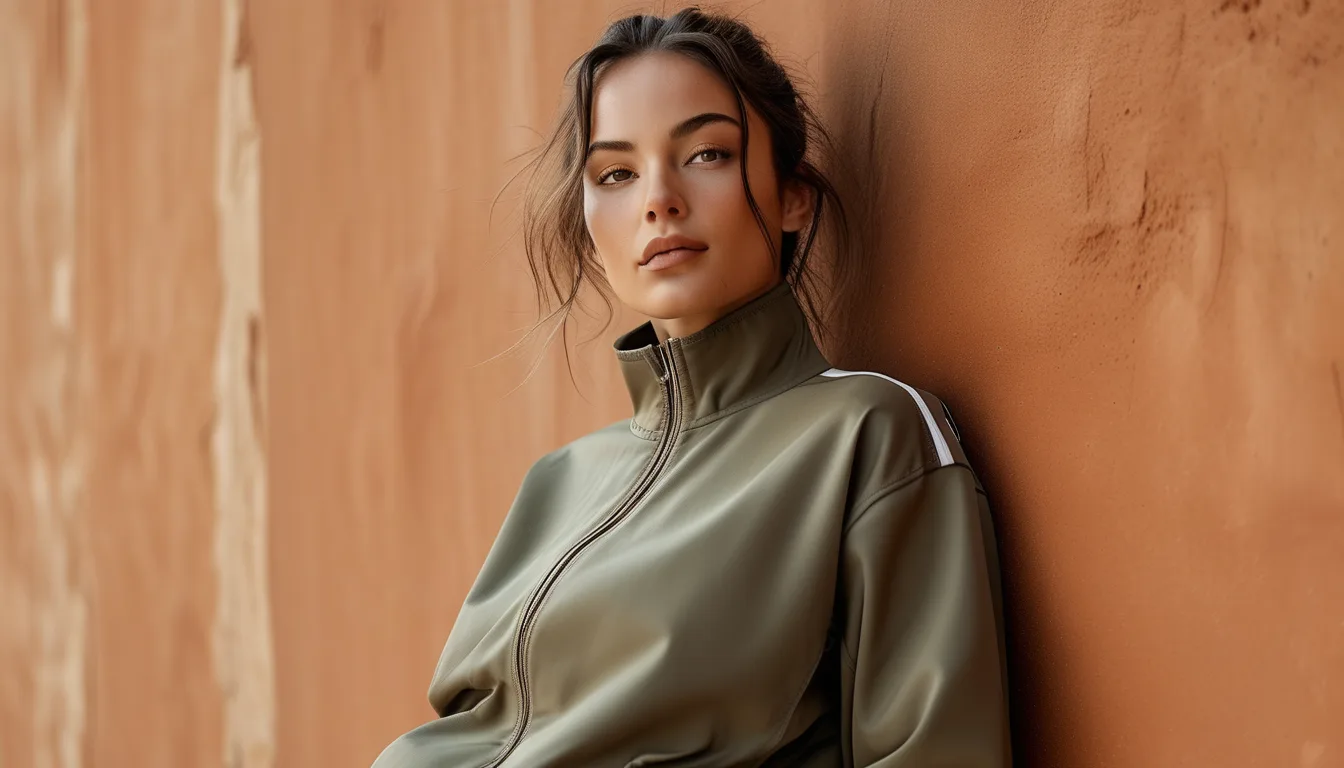
Why Earth Tone Activewear Fades Faster, and What Actually Slows It
Quick Answer: Mid-tone earth colours fade more visibly than black because a small loss of dye is a large proportional change in a mid-tone, and because the warm dye components used for rust, olive, and camel are generally less lightfast than the blacks and navies used elsewhere. What actually slows it: wash cold, wash inside out, use less detergent, skip fabric softener entirely, and dry away from direct sun. Line drying in shade preserves colour far better than either a tumble dryer or a sunny balcony.
The black leggings from two years ago still look black. The olive pair from March already looks like a different, sadder olive.
Both were washed the same way, which is exactly the problem.

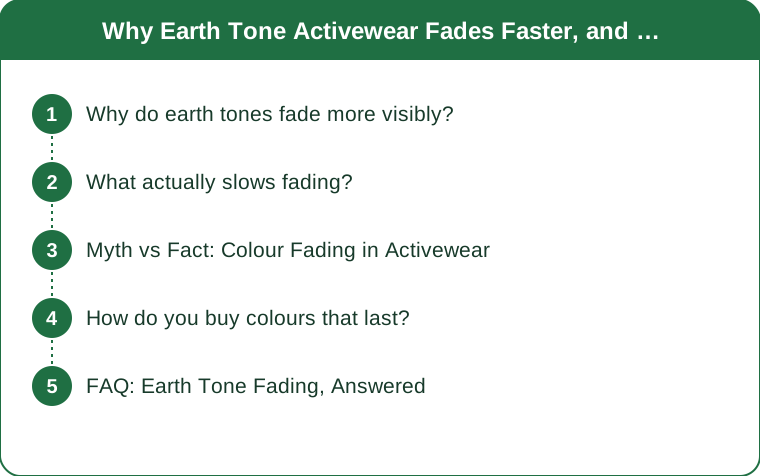
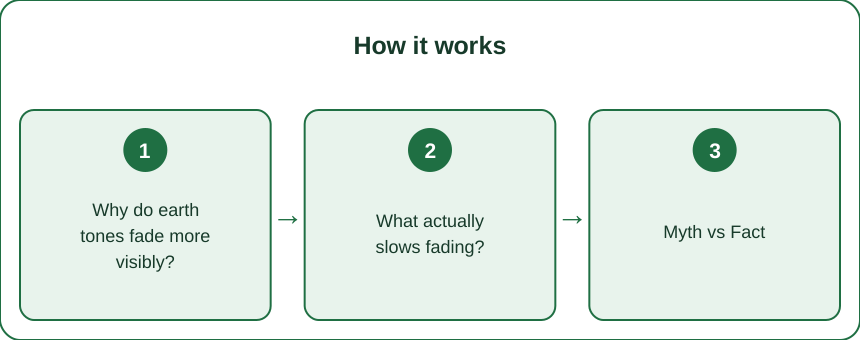
Why do earth tones fade more visibly?
A mid-tone shows proportional loss more than a dark tone. Losing a small percentage of dye from a very dark colour is barely perceptible because there is so much left. The same loss from a mid-tone olive or camel is a visible shift in both depth and hue.
Warm dye components are often less lightfast. The reds, oranges, and yellows that build rust, terracotta, and camel are generally more prone to UV degradation than the blues and blacks used elsewhere, so the colour does not just lighten - it shifts.
Uneven fading changes the hue. When one component of a mixed shade degrades faster than another, olive can drift grey and rust can drift pink. That hue shift reads as worn out far more than simple lightening does.
Synthetic activewear fabrics are dyed under specific conditions. Polyester is typically dyed with disperse dyes at high temperature, and how thoroughly the dye is fixed and washed off afterwards varies by manufacturer - which is why two olive leggings from different brands age very differently.
Sweat is mildly aggressive. Salt and the acidity of sweat, left in the fabric for hours, contribute to dye loss, particularly around the waistband and underarms where concentration is highest.
And sun exposure does the most damage of all. UV breaks down dye molecules directly, which is why a balcony drying rack in late summer sun is one of the fastest ways to age a coloured garment.
What actually slows fading?
Wash cold, always. Higher temperatures accelerate dye loss and damage elastane simultaneously. Cold washing is the single most effective change and it costs nothing.
Turn everything inside out. The abrasion of the wash cycle removes surface fibres, and surface fibres carry the visible colour. Inside out puts that abrasion on the inner face where it does not show.
Use less detergent, not more. Excess detergent does not rinse out fully and continues acting on the fabric between washes. Most people use considerably more than needed, particularly for lightly soiled activewear.
Skip fabric softener entirely. It coats synthetic fibres, reduces moisture wicking, and does nothing beneficial for activewear. This is one of the few genuinely universal recommendations in garment care.
Wash promptly after wearing. Leaving sweaty kit in a bag overnight lets salt and acidity work on the dye and encourages odour that then requires hotter washing to remove - a compounding problem.
And dry in shade, never in a dryer. Line drying out of direct sunlight is best for both colour and elastane. Direct sun causes UV fading; tumble dryer heat degrades elastane and accelerates general wear.

Myth vs Fact: Colour Fading in Activewear
Myth: Fading means poor quality. Fact: dye choice and colour depth matter more than overall garment quality. An excellent olive legging will show fading sooner than a mediocre black one.
Myth: Washing less prevents fading. Fact: leaving sweat in synthetic fabric causes its own dye damage and odour that requires more aggressive washing later. Wash promptly and gently rather than rarely and harshly.
Myth: Cold water does not clean properly. Fact: modern detergents are formulated for cold water, and lightly soiled activewear does not need heat. Odour problems usually come from delayed washing rather than from temperature.
Myth: A colour-catcher sheet stops fading. Fact: those catch loose dye in the water to prevent transfer between garments. They do not stop dye leaving the fabric in the first place.
Myth: Vinegar sets the dye. Fact: this is a persistent laundry myth. It has some effect on certain natural fibre dyes and essentially none on the disperse dyes used for synthetic activewear.
Myth: The dryer is fine on low. Fact: even low heat degrades elastane over time, which shortens the useful life of the garment regardless of what happens to the colour.
How do you buy colours that last?
Prefer solid dyed fabrics over printed ones in earth tones. Prints have colour on the surface only; solution or piece dyed fabrics carry it through, which ages more gracefully.
Deeper versions of earth tones hold up better. A deep forest or a dark chocolate has more dye depth to lose than a pale sage or a light camel, so the same absolute loss is less visible.
Buy the earth tones you wear least in the sun. If most of your outdoor training happens in bright light, put your earth tones in the indoor rotation and your blacks outside.
Check reviews for fading specifically. Search reviews for the words faded and washes. This is one of the few garment properties that reviews report reliably, because it is unmistakable when it happens.
Buy sets together if you want them to match. Two pieces bought a year apart in the same named colour will not match, both because of dye lot variation and because they will age at different rates.
And accept a shorter colour life for the pay-off. Earth tones are worth wearing precisely because they look good in low autumn light. Treating them as a two-year colour rather than a five-year one is a more useful frame than trying to make them behave like black.
FAQ: Earth Tone Fading, Answered
Why do my olive leggings fade faster than my black ones?
Because a small dye loss is proportionally much more visible in a mid-tone, and the warm dye components in olive, rust, and camel are generally less resistant to UV than blacks and navies.
What is the best way to wash coloured activewear?
Cold water, inside out, less detergent than you think, no fabric softener, and line dry out of direct sunlight. Wash promptly after wearing rather than leaving kit in a bag.
Does the dryer cause fading?
Heat accelerates general degradation and damages elastane, which shortens garment life. Direct sunlight is worse for colour specifically, so shade line drying beats both.
Can I restore faded activewear?
Not reliably. Synthetic fabrics do not take home dyeing well, and results are usually uneven. Prevention is the only realistic strategy for these fabrics.
TL;DR:
- Earth tones fade more visibly because mid-tones show proportional dye loss clearly and warm dye components are less lightfast.
- Uneven fading shifts the hue - olive drifts grey, rust drifts pink - which reads as worn out faster than simple lightening.
- Wash cold and inside out, use less detergent, skip fabric softener entirely, and wash promptly after sweating.
- Line dry in shade: direct sun causes UV fading and dryer heat degrades elastane.
- Buy deeper versions, avoid prints in earth tones, and buy matching pieces together rather than a year apart.
Earth tones are a two-year colour, not a five-year one. Wash them properly and you get the full two.
See It in Motion
Seen here: Super High Waist Embossed Yoga Leggings with Inner Pocket — shop it on bubblelime.com
Keep Reading
This article is for general informational and styling purposes only. Fit, sizing, and product availability may vary.