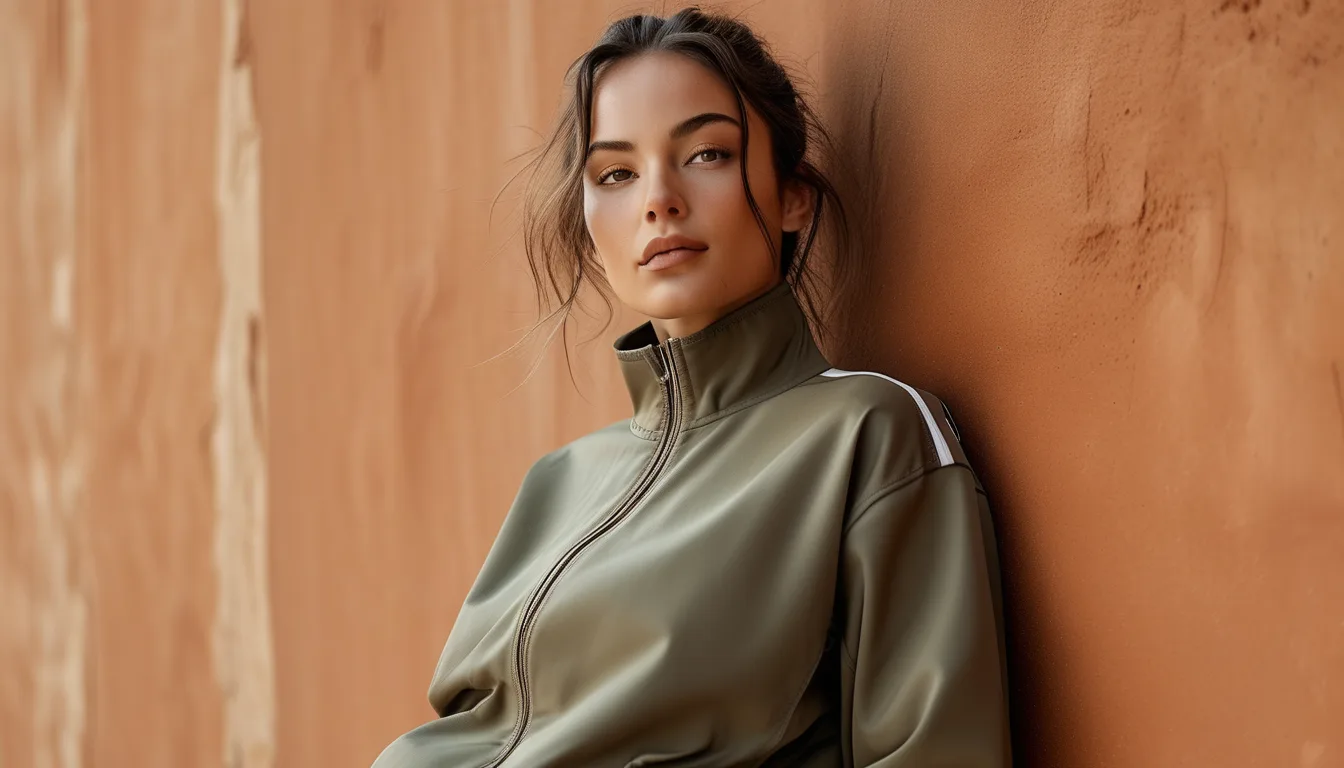
Which Earth Tones Actually Suit You? A Skin Undertone Guide
Quick Answer: Earth tones lean warm as a family, which is why warm undertones can wear nearly all of them - camel, rust, terracotta, olive, chocolate - straight off the rack, while cool undertones glow in the gray-influenced side of the palette: mushroom, taupe, sage, slate-olive, espresso. Find your undertone with three quick checks (vein color, jewelry metal, white-paper comparison), then use value and contrast to fine-tune. And any earth tone can be worn by anyone with the distance-from-face rule: bottoms are a free pass, and a buffer layer fixes the rest.
Earth tones took over activewear and everyday wardrobes for good reason - they mix effortlessly, hide wear, and photograph beautifully. But the same terracotta set that makes one woman look sun-warmed makes her friend look like she is fighting a cold, and neither of them did anything wrong. The variable is undertone: the fixed temperature underneath your skin color that decides which browns befriend your face. Five minutes of diagnosis, and the entire beige-to-chocolate spectrum sorts itself.
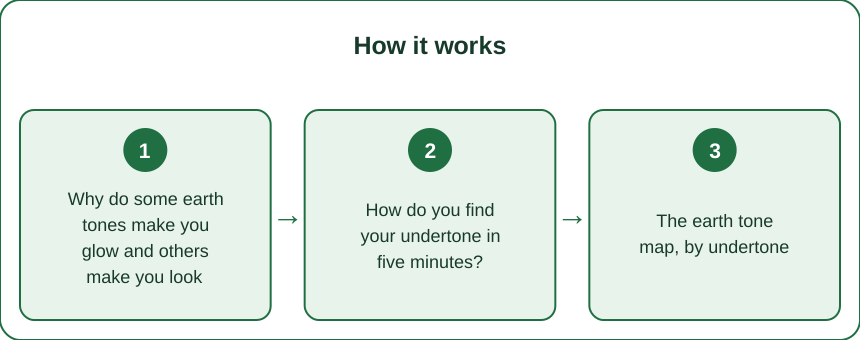
Why do some earth tones make you glow and others make you look tired?
Because color next to your face either harmonizes with your skin’s underlying temperature or argues with it - and the argument shows up on you, not the clothes.
Undertone is not skin tone. Skin tone is the surface depth - fair through deep - and it changes with sun and season. Undertone is the hue temperature underneath: warm (golden, peachy, yellow-based), cool (pink, red, blue-based), or neutral (a balance, or olive skin’s particular green-gray cast). It never changes, tan or no tan, and two people of identical depth can carry opposite undertones - which is why your friend’s exact camel jacket does something different on you.
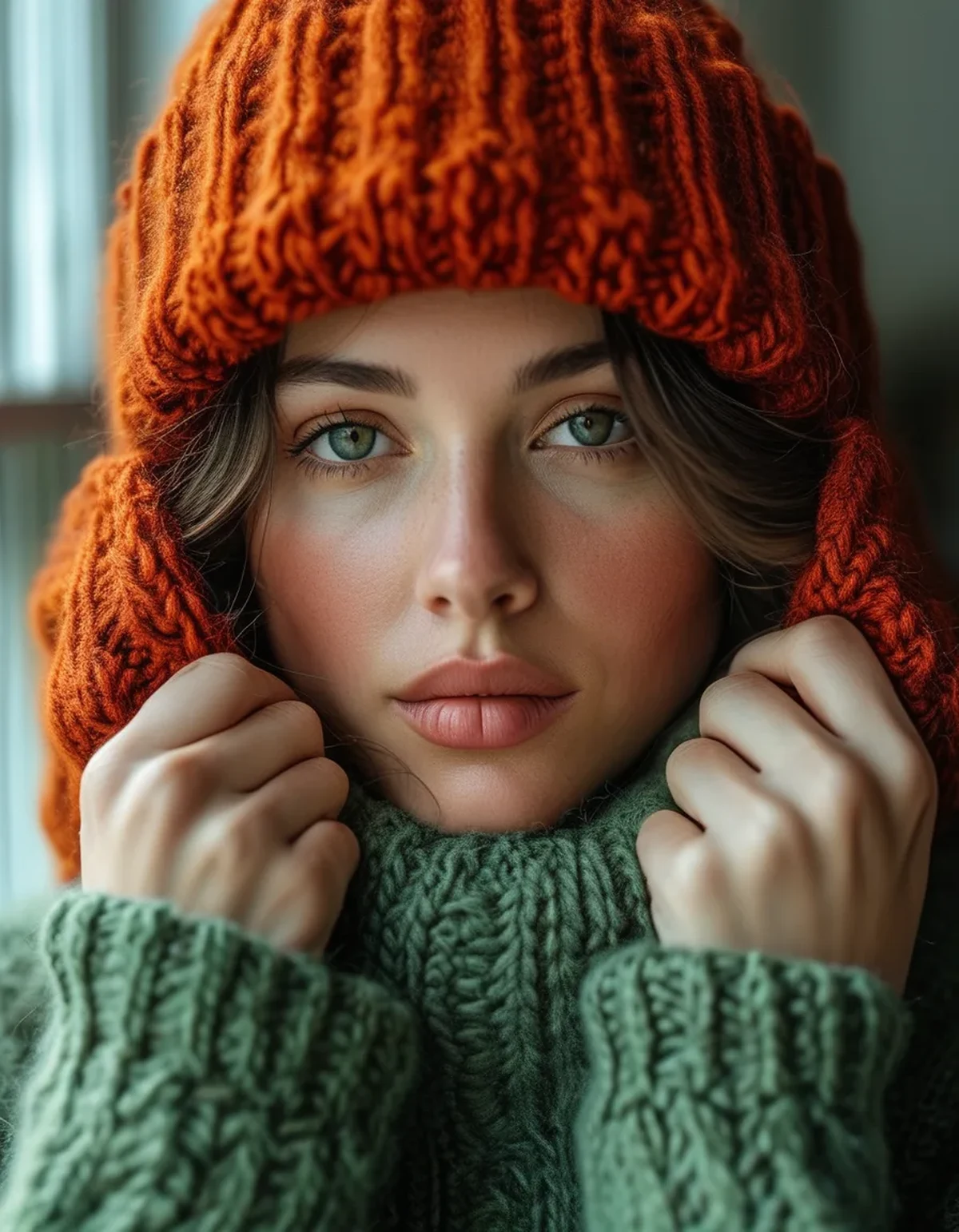
The mechanics are reflection. Fabric near your face bounces its color onto your skin. A warm rust throwing golden light onto an already-golden undertone amplifies it - the glow effect. The same rust throwing gold onto a cool pink undertone muddies it: the mix reads as sallow, shadows deepen, and the tired look appears, no sleep debt required. The reverse holds too - a cool mushroom gray-brown crisps up a cool complexion and can flatten a warm one.
Earth tones make this high-stakes because the family leans warm. Most of the palette - camel, tan, rust, terracotta, olive, caramel - is yellow- or orange-based, which is exactly why the earth-tone trend feels effortless to warm undertones and quietly treacherous to cool ones. The cool-friendly earth tones exist, but they are the minority shades with gray or pink mixed in, and they hide in the same section of the store.
And value and contrast matter alongside temperature. How light or dark a shade is, and how much it contrasts with your hair and skin depth, decides whether a correctly-warmed shade actually flatters - the second dial the next sections turn.
How do you find your undertone in five minutes?
Three classic checks, run in daylight - window light, no makeup on the test areas, and the results voted together.
Check 1: the veins. Inner wrist, natural light. Veins reading distinctly green suggest warm; distinctly blue or purple suggest cool; a genuine mix of both, or can’t-really-tell, points neutral. This is the fastest check and the least reliable alone - treat it as one vote, not a verdict.
Check 2: the jewelry test. Which metal makes your skin look healthier - not which you prefer, which flatters: gold flattering warm undertones, silver flattering cool, both looking equally good on neutral. Hold actual pieces against your inner arm and collarbone if you own both; memory lies, metal does not.
Check 3: the white paper test. Face beside a sheet of pure white paper in the mirror, daylight. Against true white, skin casts resolve: a yellow or golden cast reads warm, a pink, rosy, or bluish cast reads cool, and a hard-to-name greenish or balanced cast reads neutral or olive. This is the most direct check, because it tests the face - the place the clothing decision actually lands.
Tiebreakers for the genuinely stuck: how your skin responds to sun (tans easily to golden - warm-leaning; burns pink first - cool-leaning; tans olive - likely neutral-olive), and the wardrobe autopsy - the shirt strangers compliment your face in is data, and the one that always prompts you look tired is data too.
Two clarifications that unstick most people: deep skin is not automatically warm - every depth carries every undertone, and the checks work identically across all of them. And if you test neutral, that is a real answer, not a failed test: neutral undertones get most of the map with value as their only real constraint - the next section’s rules apply loosely to you, and depth-matching matters more.
The earth tone map, by undertone
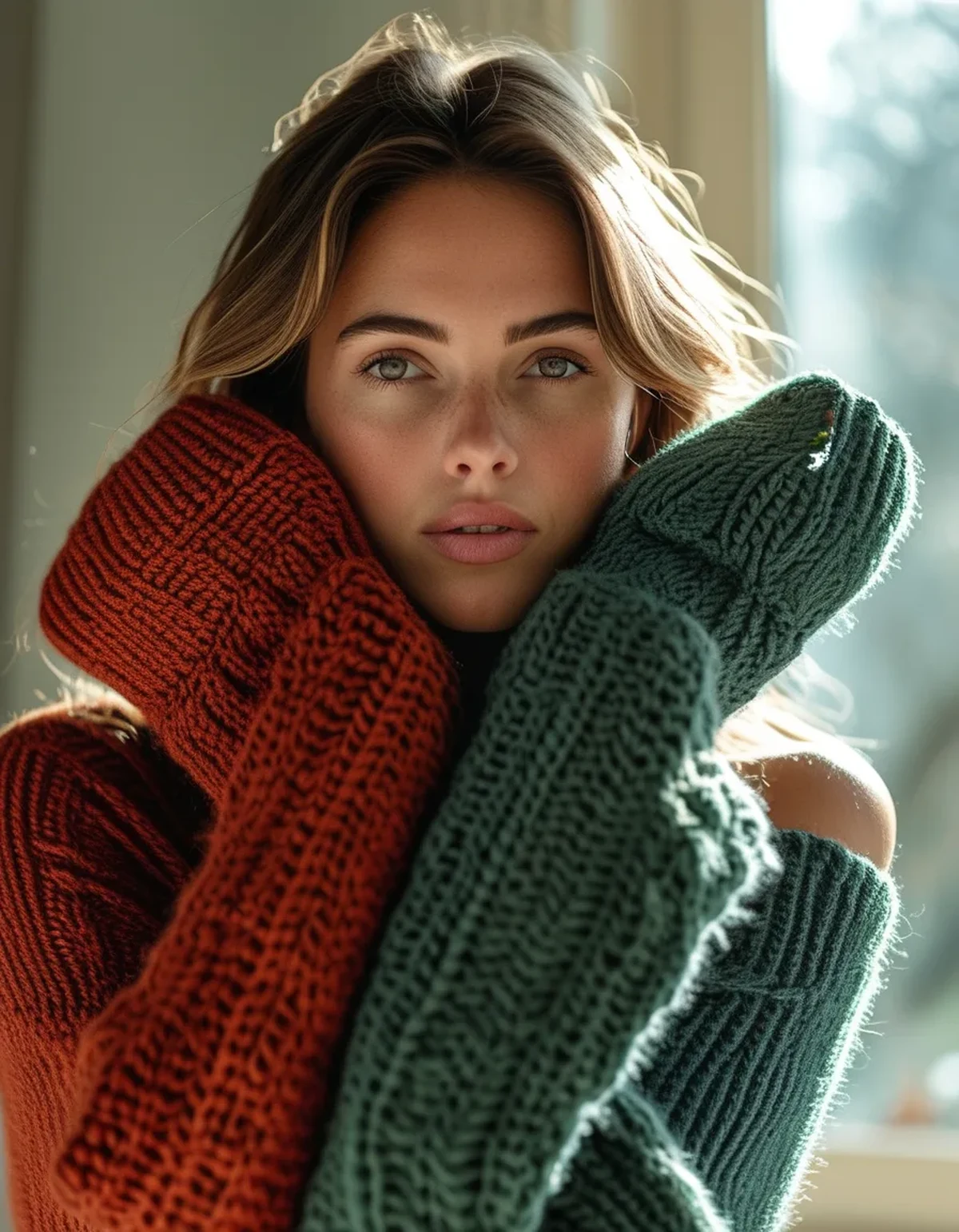
The whole palette, sorted. Shades listed as near-face shades - tops, knits, jackets, and anything above the waist.
Warm undertones - the home team:
- Best: camel, caramel, rust, terracotta, burnt orange, golden tan, warm olive, chocolate, cream (over stark white, always).
- Great: mustard-adjacent ochres, warm khaki, brick.
- Handle with care: the grayed-out shades - mushroom, cool taupe, slate - can flatten warm skin; if you love them, warm the styling with gold jewelry or a cream layer underneath.
Cool undertones - the gray-influenced side of the palette:
- Best: mushroom, taupe, gray-brown, sage, eucalyptus, slate-olive, deep espresso (dark enough to read neutral), mauve-browns and rose-taupe - the earth tones with pink or gray in their DNA.
- Great: stone, greige, cocoa with a rosy cast.
- Handle with care: rust, terracotta, camel, and golden tan next to the face - these are the argument-starters; the loopholes section handles them.
Neutral and olive undertones: most of the map works - the constraint shifts from temperature to value and clarity. Olive skin in particular tends to sing in the muted mid-tones (olive green, unsurprisingly, plus khaki, taupe, espresso) and can be washed out by very pale beiges near the face.
Then tune with depth and contrast, whatever your temperature: light features with low contrast (fair skin, light hair) do best keeping earth tones light-to-mid near the face - oat, sand, soft sage - with the deep chocolates worn below or broken by a lighter layer. Deep skin and high-contrast coloring carry the rich end - espresso, deep rust, dark olive - with presence, while the palest beiges can read washed-out and are better as accents. The rule of thumb that covers ninety percent of cases: match the shade’s temperature to your undertone, then match its depth to your contrast level - an earth tone matching set in your best-tested shade is the entire outfit problem solved in one decision.
How to wear the wrong earth tone anyway: the loopholes
Color analysis is a tool, not a prison. If cool-toned you loves terracotta, wear it - through one of these doors:
Loophole 1: the distance rule - bottoms are a free pass. Undertone effects live within about a foot of your face; below the waist, temperature barely registers on your complexion. Terracotta leggings, camel trousers, rust skirts - all fully available to every undertone, forever. This is the biggest loophole and the reason the leggings wall is undertone-neutral territory: the flattering question for bottoms is fit and depth, not temperature.
Loophole 2: the buffer layer. Keep the tricky shade off your skin with a flattering intermediary - cool undertones wearing a rust cardigan over a cream or soft-white tee have inserted a bounce layer that feeds the face friendly light while the rust does its styling work an inch further out. Collars, scarves, and layered necklines all perform the same service.
Loophole 3: makeup rebalancing. A blush and lip in your undertone’s family - rosy for cool, peachy for warm - actively counters the cast a wrong-temperature top throws upward. This is the working explanation for why the same camel sweater flatters on made-up days and drains on bare-faced ones; the balancing act was happening in the blush.
Loophole 4: go monochrome and let depth do the talking. A head-to-toe column of one earth tone family - espresso through taupe, say - reads as a deliberate palette rather than a face-adjacent color choice, and the eye evaluates the outfit as a composition. Tonal dressing forgives temperature mismatches remarkably well, which is partly why the matching-set era has been kind to every undertone.
Loophole 5: accessories bridge the gap. Jewelry in your metal, shoes and bag echoing your best-tested shade, a hat in a friendly tone near the face - small correct notes that tilt the whole chord. The practical summary: your undertone decides what touches your collarbones; everything else is negotiable.
FAQ: Earth Tone and Undertone Questions, Answered
Can cool undertones wear camel at all?
Yes - three ways: as bottoms (free pass), buffered over a soft-white or gray layer, or swapped one shade sideways to greige or cool taupe, which delivers the camel effect in a cool-compatible temperature. What cool undertones should skip is bare camel knit directly against the face on a no-makeup day - that is the specific combination generating the tired look.
Is there an earth tone that flatters everyone?
Deep espresso comes closest - dark enough to behave like a neutral, so undertone barely engages - followed by mid-value olive, which sits near the warm-cool border and suits far more people than it should. When gifting or buying blind, espresso is the safe harbor; when in doubt for yourself, darker and more muted beats lighter and brighter.
Do earth tones work with gray hair?
Beautifully, with one adjustment: gray, silver, and white hair usually shifts overall coloring cooler and softer, pulling the best shades toward mushroom, taupe, sage, and espresso - even for women who tested warm in their brunette years. If your old camel pieces stopped flattering when the silver came in, that is the mechanism; re-run the paper test with the new hair in frame.
How do I find my undertone if I tan a lot in summer?
Undertone does not change with a tan - only depth does - but the surface color shift can fool the paper test. Run the checks on less-exposed skin (inner arm, the line under a watch band), lean harder on the vein and jewelry votes, and remember the practical adjustment is depth: a tan usually lets you carry richer, deeper versions of your same-temperature shades.
TL;DR:
- Undertone is the fixed temperature under your skin - warm, cool, or neutral - and it decides which earth tones befriend your face.
- Diagnose with three votes: vein color, gold-versus-silver, and the white paper test, all in daylight.
- Warm gets camel, rust, terracotta, and golden tan; cool gets mushroom, taupe, sage, and espresso; neutral tunes by depth instead.
- Depth and contrast are the second dial: match temperature to undertone, then richness to your contrast level.
- The loopholes are real: bottoms are undertone-free, buffer layers work, and monochrome forgives nearly everything.
The earth tone wall is not sorted into flattering and unflattering - it is sorted into yours and theirs, and now you can tell which is which from across the store.
See It in Motion
Seen here: High Waist 8” Yoga Shorts — shop similar styles on bubblelime.com
Keep Reading
This article is for general informational and styling purposes only. Fit, sizing, and product availability may vary.